Bhikshavratti Mukt Abhiyan
Bhikshavratti Mukt Abhiyan
Begging is one of the most endemic yet least understood social challenges in India. Rising poverty, widening social inequality, lack of access to education and healthcare, migration, disability, substance dependence, unemployment and fractured family systems have made begging a distressing reality for a large section of the population. As the number of people dependent on begging increases, the burden on the working population grows, while valuable human potential remains underutilized hindering inclusive and constructive human development.
Recognizing begging as a multi-layered socio-economical & psychosocial issue, Badlav initiated Bhikshavratti Mukt Abhiyan (BMA) a comprehensive rehabilitation initiative aimed at restoring identity with dignity, and self-reliance among people engaged in the act of begging. The Abhiyan addresses not just the visible act of begging, but the underlying vulnerabilities that sustain it.
Swawlamban
Our Approach: Layered Interventions for a Layered Problem
BMA follows an integrated, holistic approach that addresses the psychological, social, economic, and educational dimensions of an individual’s life. Recognizing that these dimensions are deeply interconnected, we work across all areas simultaneously to create meaningful, sustainable, and lasting transformation.
Basic Humanitarian Facilities
We ensure that every participant has access to essential necessities that provide safety, stability, and dignity.
- Safe shelter with clean bedding and secure living spaces.
- Regular access to nutritious meals and clean drinking water.
- Essential clothing, sanitation facilities, and daily living necessities.
Psychological Support
Every participant receives in-depth counselling and psychotherapy through a trauma-informed and person-centred approach. Our focus is on:
- Healing from long-standing trauma, neglect, and abuse.
- Addressing psychological distress, emotional dysregulation, and low self-esteem.
- Supporting recovery from substance dependence and harmful coping behaviours.
- Building motivation, emotional resilience, confidence, and self-belief.
Medical Support
We prioritise the physical health and overall well-being of every participant through:
- Medical assistance and treatment for existing health conditions.
- Comprehensive health check-ups covering five major health domains to identify potential health concerns.
- Regular medical follow-ups to monitor recovery and ensure continued well-being.
Economic Empowerment
Economic vulnerability is one of the key factors contributing to begging. BMA addresses this challenge by creating pathways towards sustainable livelihoods and financial independence.
- Each participant’s skills, interests, and capabilities are carefully assessed and mapped. Existing skills are identified, and emerging abilities are nurtured through appropriate training.
- Participants receive support through employment opportunities, vocational training, and livelihood assets to establish micro-enterprises.
- Continuous mentoring and guidance help ensure income sustainability and dignified livelihoods.
Through these integrated interventions, Bhikshavratti Mukt Abhiyan (BMA) enables individuals to move beyond survival towards self-reliance, independence, and a life of dignity.
Social Reintegration
Begging often results in social exclusion, invisibility, and the loss of personal identity. BMA works to restore social connections, recognition, and a sense of belonging by:
- Reconnecting participants with their families wherever possible.
- Providing family counselling to rebuild trust, strengthen relationships, and restore emotional bonds.
- Facilitating access to essential identity documents, including Aadhaar, PAN cards, bank accounts, and ration cards.
- Connecting participants with government welfare schemes, social protection programmes, and their legal entitlements.
These interventions help individuals reclaim their identity, rebuild meaningful relationships, access their rights, and regain their rightful place in society.
Our ultimate goal is not just to end begging, but to restore identity with dignity and create pathways towards a self-reliant and empowered life.
Bal Jeewanshala
Play. Learn. Innovate.
Bal Jeewanshala is Badlav’s child-centered initiative focused on
rehabilitation of children engaged in begging
by bringing them back into the mainstream through education, care,
and creative development.
The objective of this initiative goes beyond conventional schooling.
Bal Jeewanshala aims at holistic childhood development,
ensuring that children are not only educated but also emotionally
secure, confident, and capable of discovering their hidden talents.
Children enrolled in Bal Jeewanshala are provided with:
- A safe and nurturing environment
- Access to education, nutrition, healthcare, and psychosocial support
- Structured activities that promote curiosity, creativity, and self-expression
Key Components
Learning with Activity & Fun
An experiential learning approach that combines academics
with play, art, storytelling, and hands-on activities,
making education joyful and meaningful.
Hum Bhi Hunarmand
A skill and talent development module that nurtures
children’s creative abilities in art, craft, performance,
and practical life skills like theatre, dance, singing,
and poetry, building confidence and self-esteem while
providing them a platform to grow.
Bal Jagrik
A child participation and awareness platform that encourages
children to understand their rights, responsibilities,
and role as informed young citizens.
Children are enrolled in local schools and are connected with
different child rights protection schemes.
Bal Jeewanshala ensures that children once pushed to the margins
are given the opportunity to
dream, learn, and thrive.
Street to Skill
From Survival to Sustainable Livelihoods
Street to Skill is Badlav’s focused initiative to enable adolescent individuals engaged in begging to transition towards dignified and sustainable livelihoods. Recognizing that economic vulnerability is a key driver of begging, this program emphasizes practical skill-building and employability.
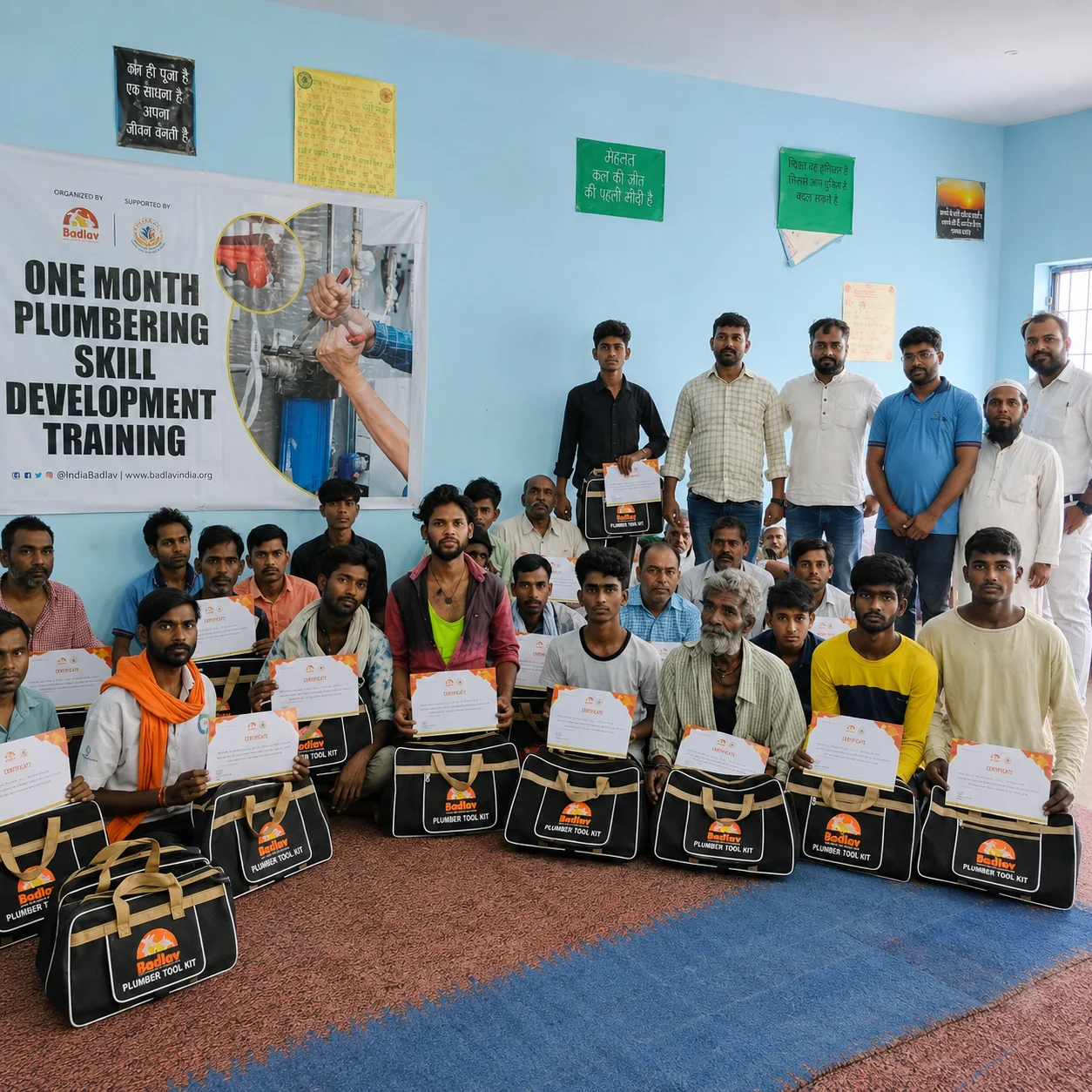
Under this initiative, participants are provided with hands-on vocational training based on their abilities, interests, and local market needs. Training areas include plumbing, cooking, housekeeping, and other service-based skills, ensuring that individuals are equipped with income-generating capabilities.
The program goes beyond training by supporting placement linkages, mentorship, and initial handholding, enabling individuals to start earning and sustaining themselves. Street to Skill aims to transform dependency into self-reliance by creating pathways for long-term economic inclusion.
Happy Life
Care, Recovery, and Rehabilitation with Dignity
Happy Life is a rehabilitation-focused initiative for mentally ill destitute individuals, providing them with structured care, treatment, and pathways to reintegration. The program addresses the complex intersection of homelessness, mental illness, and social abandonment.Under this initiative, individuals are provided with safe shelter, medical and psychiatric care, counselling, and daily living support within a rehabilitation framework. The focus is on stabilization, recovery, and restoring functional independence.
A key component of Happy Life is family tracing and reintegration, where efforts are made to reconnect individuals with their families through counselling and mediation. For those without family support, the program facilitates sustainable livelihood opportunities, ensuring long-term care and dignity.
Happy Life works towards restoring not just health, but identity, belonging, and the right to live with dignity.
Who We Are
The inspiration behind Badlav dates back to 2003 when Sharad Patel came to Lucknow from his village to pursue higher studies. Outside the railway station, he saw many people including children begging for food and money, some also using intoxicants openly. This was new for him, as no one begged in his village. The scene made him feel worried and pushed him to think deeply about their lives and struggles.
Quick Link
What We Do
Connect Us
C-1857, Rajajipuram, Lucknow, UP-226017
Registered Address:
545, KA/5 U20, Shukla Vihar, Near St. Anthony Public College, Para, Lucknow, UP-226017
